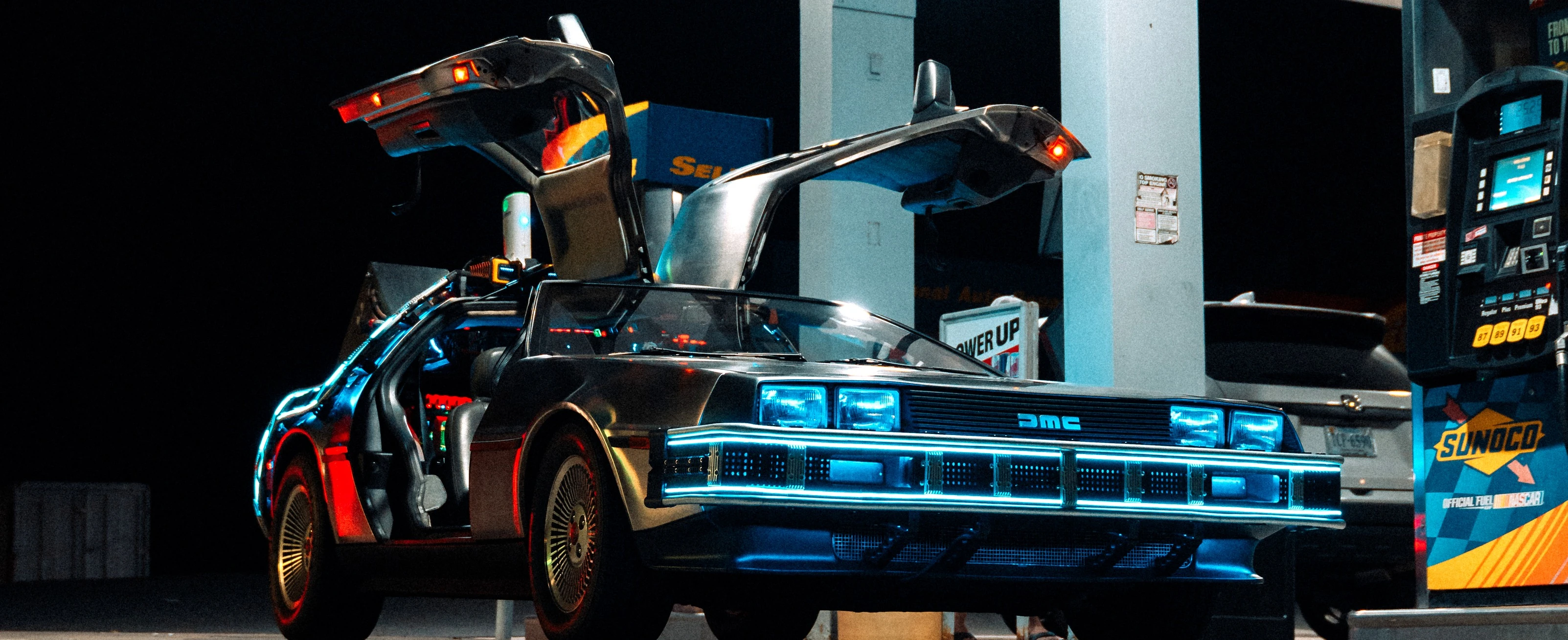
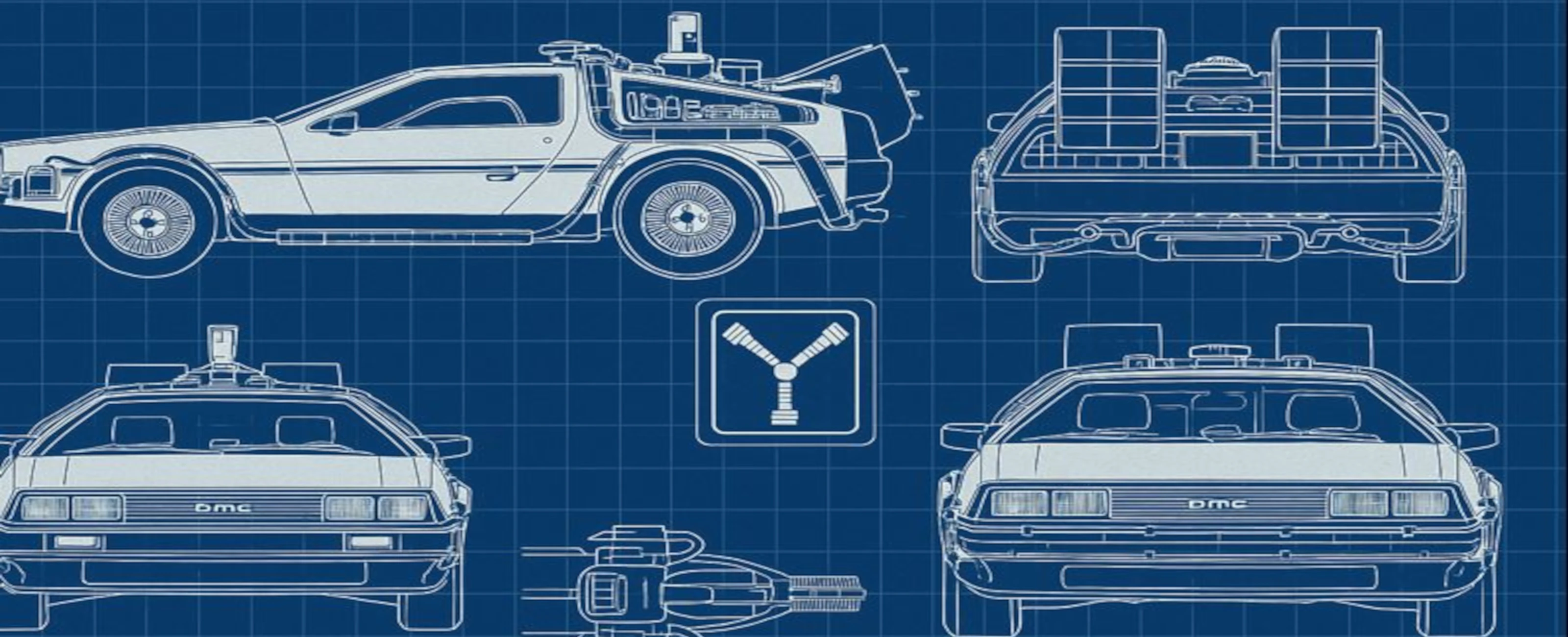
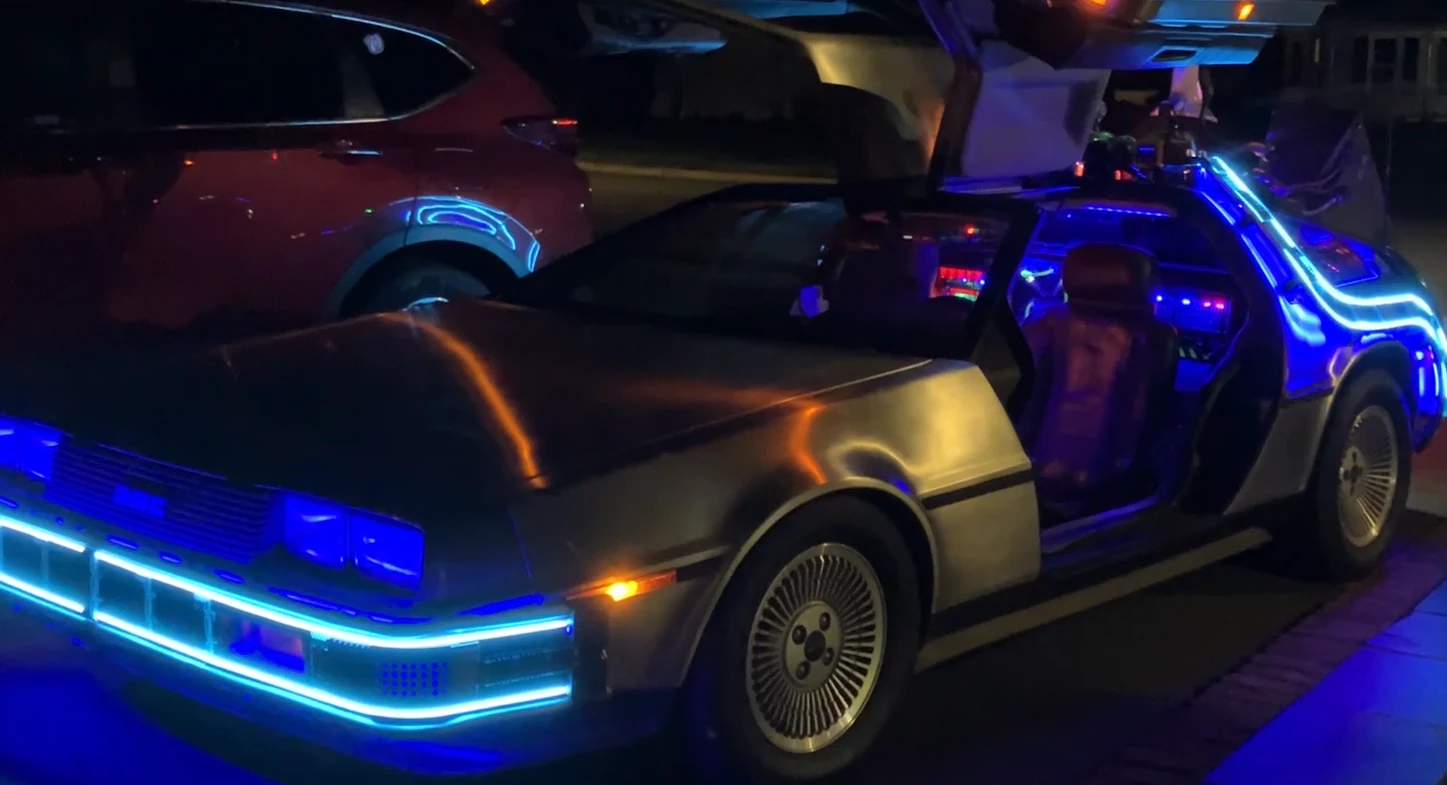
Corkron Time Machine LLC is bringing an authentic 1982 DeLorean Time Machine experience to the Washington, DC Auto Show, in partnership with the Theresa Sondra Jacobs Foundation.
STEAM is Science, Technology, Engineering, Art, and Math working together.
This exhibit shows all five in one experience.
T
Technology
Microcontrollers act like the system brain, coordinating lighting, sound, and timing cues. This is the same idea used in robotics, automation, and embedded devices we use every day.
E
Engineering
Circuits amplify safe control signals into real effects. Relays, MOSFETs, resistors, and fused power paths make the show reliable and repeatable, with safety designed in from the start.
A
Art and Imagination
Light, motion, and sound design shape the experience. Timing and patterns create the illusion of energy and time travel, turning technical systems into something you can feel, not just measure.
S
Science: perception, light, sound, and energy concepts
M
Math: timing, cycles, frequency, and patterns
Designed as a System
Control logic, power distribution, and presentation effects are designed together to create a reliable, repeatable, and safe exhibit experience.
Control SystemsPower and SafetyLight and Sound Design
Flux Capacitor
STEAM in Motion
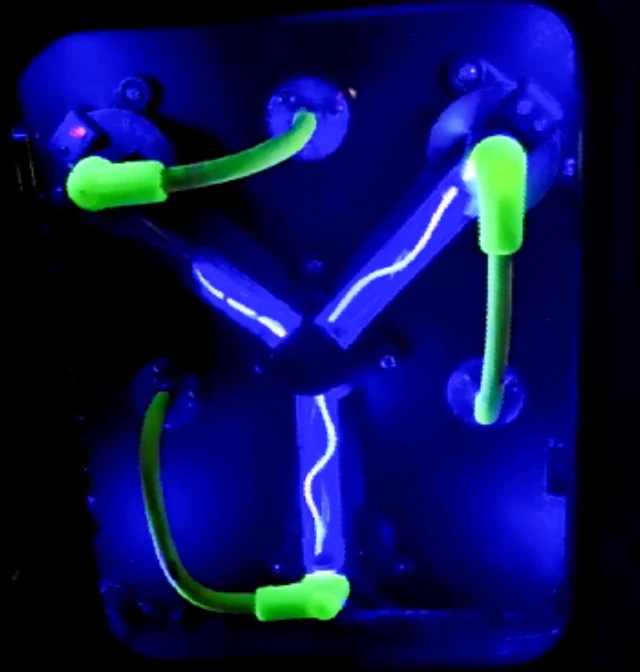
The Flux Capacitor demonstrates how code, electronics, and design combine to turn abstract signals into a physical, visible effect. What looks like cinematic energy is actually a coordinated system of control logic, power electronics, and human interaction working together in real time.
Technology: An Arduino Mega acts as the control system, running custom animation code that sequences multiple lighting layers and responds to live inputs.
Engineering: Metal Oxide Sulfide Field Effect Transistor (MOSFET) drivers safely amplify low-power control signals into high-current outputs required by LED filaments and high-brightness COB LEDs. This allows dramatic visual effects while maintaining electrical safety and reliability.
Science: Timed light pulses, diffusion, and color blending exploit how the human eye perceives motion and brightness, creating the illusion of electrical arcing and flowing energy.
Art and Imagination: The iconic Y-shaped layout, layered lighting, and arc-flash effects transform technical components into a recognizable and emotionally engaging visual centerpiece.
Math: Animation speed, timing cycles, and mode transitions are controlled by numerical parameters. A physical potentiometer on the Flux Capacitor lets visitors see how changing values directly alters system behavior.
Interactive and modular design
Serial communication from the overhead console enables on/off control and multiple operating modes
Real-time adjustment of animation speed and patterns via onboard potentiometer
Combination of sequenced LEDs, blue LED filaments, and high-brightness COB LEDs for layered effects
Quick-disconnect electrical connectors allow the entire Flux Capacitor module to be safely removed for transport or service
Rear Window Displays
Fabrication, Control, and Energy Illusion
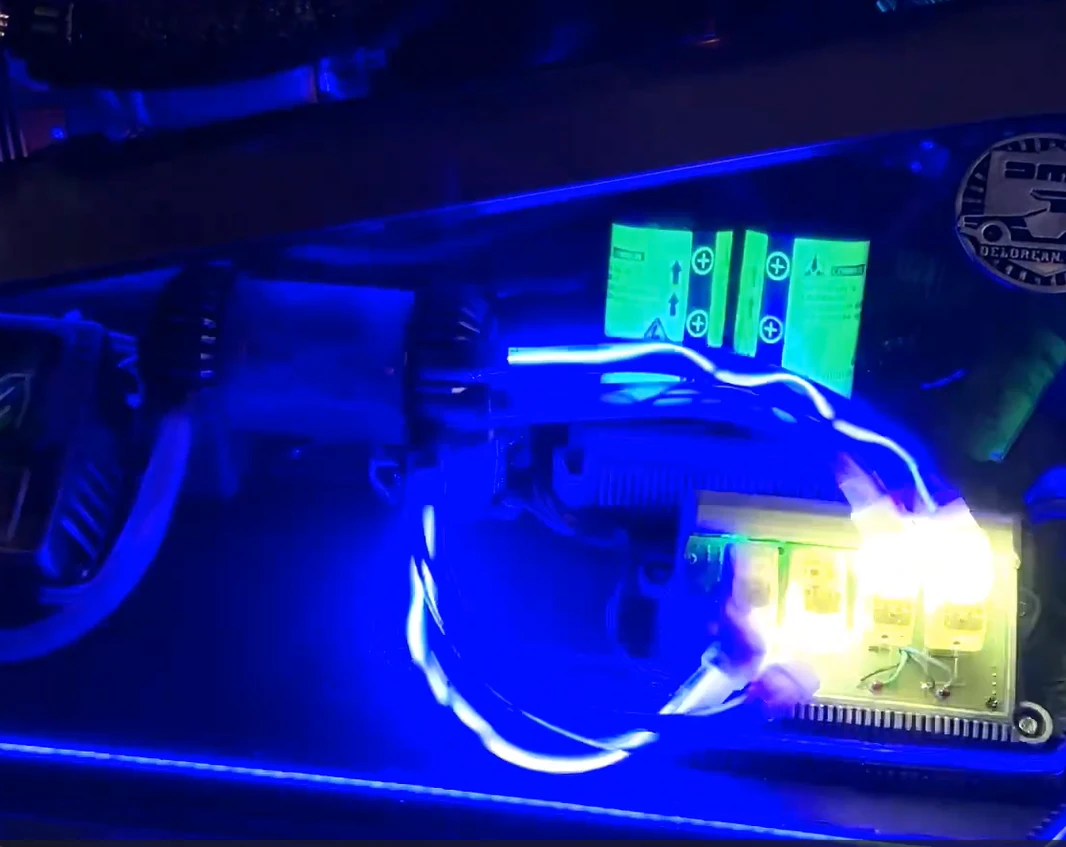
The rear window displays showcase how digital fabrication, electronics, and software come together to create a cohesive visual system. What appears to be flowing electrical energy is the result of coordinated control logic, custom-built structures, and layered lighting effects.
Technology: Multiple microcontrollers manage synchronized lighting and audio effects across the rear pod assemblies, allowing complex animations to operate as a unified system.
Engineering: High-current LED circuits are driven through protected driver stages, while modular wiring and enclosures keep power distribution reliable, serviceable, and safe.
Science: Sequenced light pulses, diffusion, and synchronized sound cues exploit how the brain interprets motion and intensity, creating the illusion of energy transfer and electrical arcing.
Art and Imagination: The pod structures combine light, reflection, and sculpted forms inspired by classic science fiction design language, transforming technical hardware into a believable fictional power system.
Animation timing, modulation rates, and synchronization offsets are defined numerically, ensuring repeatable behavior and precise alignment between visual and audio effects.
Fabrication and system design highlights
Custom 3D printed enclosures house Arduino Mega controllers and supporting electronics
Printed components provide structural mounting, cable management, and diffusion for LED effects
Integrated sci-fi artifacts support and frame lighting elements while maintaining modular access
Layered lighting and synchronized audio reinforce the “plasma” energy illusion
Designed for visibility at distance and maximum impact in low-light environments
Interior Systems
Human Interface and Control Architecture
The interior cockpit demonstrates how humans interact with complex electronic systems. Every switch, indicator, and display is live and functional, forming a centralized control environment where user input directly drives software, power distribution, and visual output throughout the vehicle.
Technology: An Arduino-based control architecture manages user input, serial communications, and system state. The overhead control unit monitors illuminated momentary push buttons and sends commands to subsystems throughout the vehicle to activate effects and change operating modes.
Engineering: A rear-wall backplane integrates power distribution and control hardware, including a functioning fuse panel with status indicators, relays, bus bars, and accessory power circuits. Systems are designed for reliability, serviceability, and electrical isolation.
Science: Visual feedback through illuminated switches, indicators, and displays reinforces cause-and-effect learning. Timing, brightness, and color changes help users intuitively understand system state and activity.
Art and Imagination: The cockpit layout, lighting, and tactile controls transform technical hardware into an immersive science fiction interface, reinforcing the illusion of a machine in active operation.
Math: Timing intervals, serial data values, display offsets, and state logic are all numerically defined. The Time Computer demonstrates how digital values are translated into readable time data across multiple displays.
Interior system design highlights
Overhead Arduino Mega control unit monitoring illuminated push buttons and system states
Serial communication network linking interior controls to exterior and rear subsystems
Companion switch unit providing redundant and grouped control inputs
Rear-wall electronics backplane with live fuse status indicators, relays, bus bars, and antenna control
Dedicated lighting controller for turn signals, brake lights, running lights, reverse lights, and emergency flashers, all LED-based
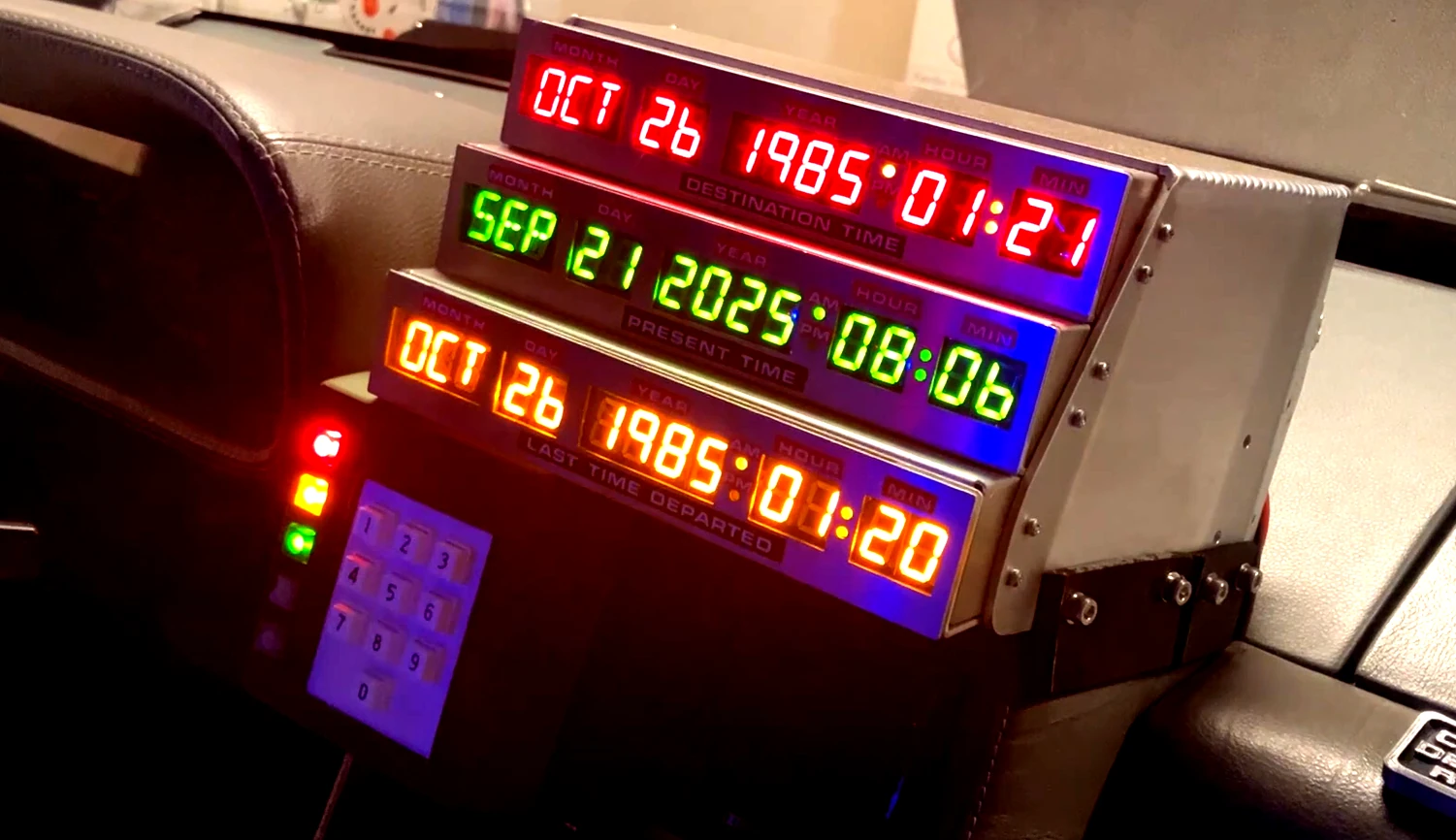
Modified Time Computer using microcontroller-driven data to set Present Time, Destination Time, and Last Time Departed displays
Extensive use of custom 3D printed enclosures for controllers, switch housings, cable management, and lighting diffusion
Exterior Systems
Distributed Energy and Visual Signaling Architecture
The exterior systems demonstrate how distributed lighting, embedded control, and visual perception work together to create a large-scale, high-impact experience. What appears to be raw energy and motion is actually a coordinated network of microcontrollers, lighting drivers, and custom hardware designed for visibility, safety, and dramatic effect in real-world environments.
Technology: Multiple Arduino-based controllers manage exterior lighting effects, animation timing, and operating modes. Dedicated microcontrollers handle specific subsystems, including the roof-mounted tachyon emitter, rear platform reactor effects, and vehicle-wide flux band illumination. Push-button controls on the rear platform allow direct user interaction to change modes and activate navigation lighting.
Engineering: High-current lighting elements are driven through appropriate power electronics, including MOSFET drivers and protected power paths. The rear platform integrates a tokamak-style reactor base, Mr. Fusion prop, staged cooling vents, and high-voltage styled cabling, all mounted using custom-designed 3D printed structures that provide mechanical support, isolation, and service access.
Science: Infinity-mirror effects within the tachyon emitter exploit reflection and depth perception to create the illusion of a tunnel of light extending beyond the physical boundaries of the device. Pulsed lighting, color contrast, and motion sequencing take advantage of how the human visual system interprets brightness, repetition, and direction to suggest flowing energy and active field generation.
Art and Imagination: The exterior layout transforms engineering components into a believable science fiction energy system. Blue flux bands, glowing reactors, animated vents, and pulsing conduits create a cohesive visual language that communicates motion, power, and purpose, even at a distance or in low-light environments.
Math: Animation rates, brightness curves, sequencing offsets, and mode transitions are controlled by numerical parameters defined in software. Timing values determine pulse speed, phase relationships, and synchronization across subsystems, ensuring consistent behavior during live operation.
Exterior system design highlights
Distributed Arduino-based control architecture for exterior lighting and effects
Roof-mounted tachyon emitter featuring front-and-back infinity mirrors for wormhole illusion