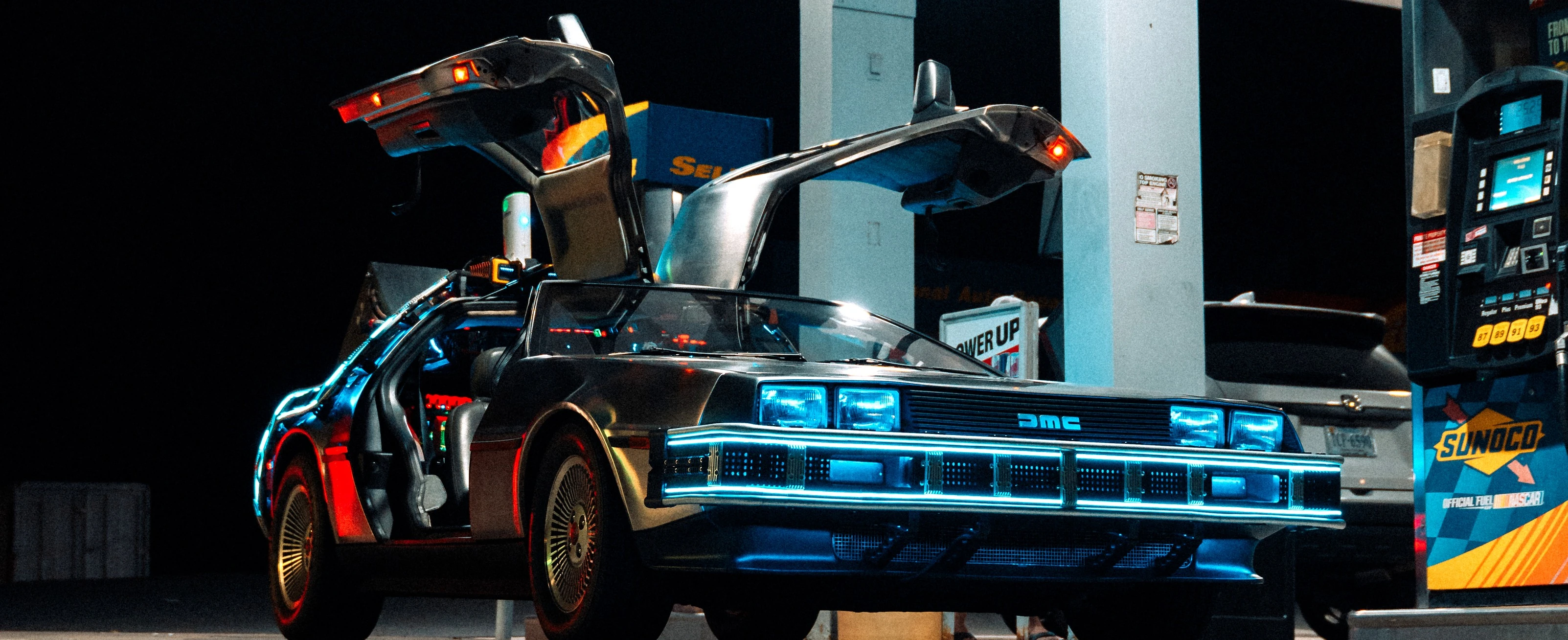
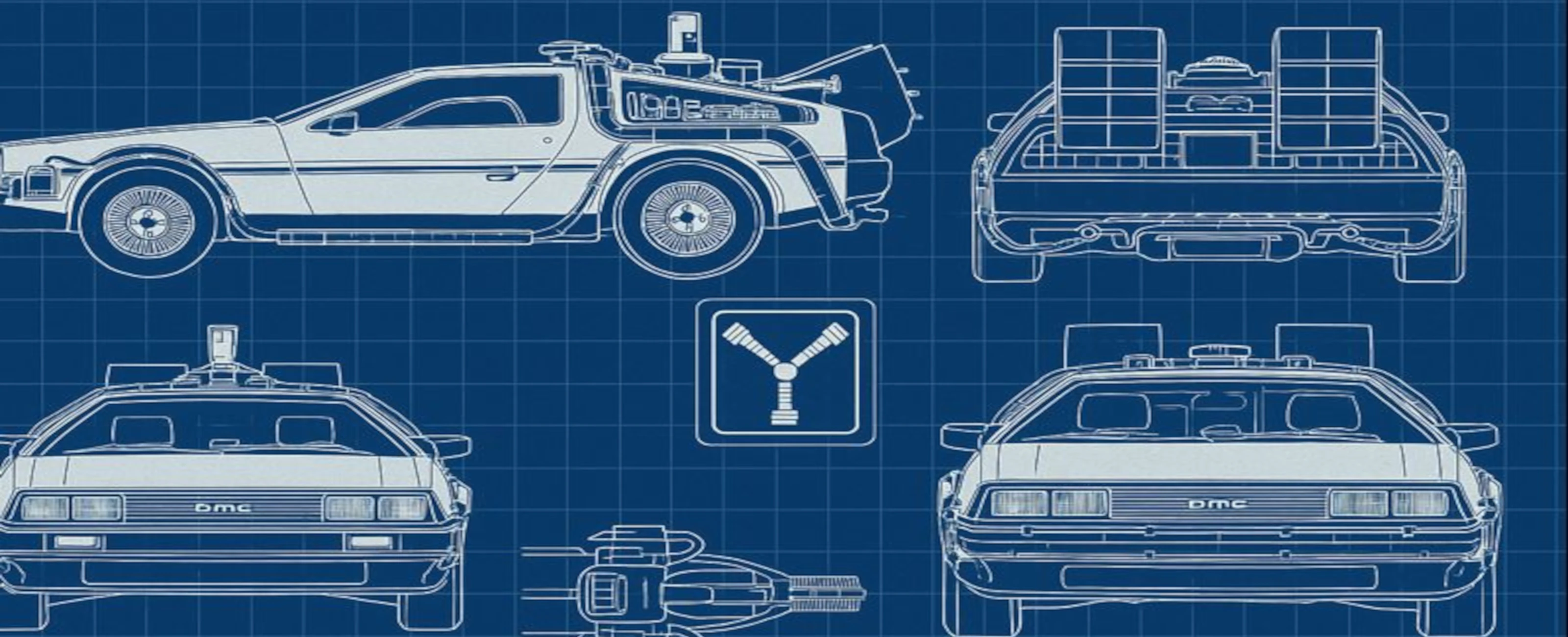
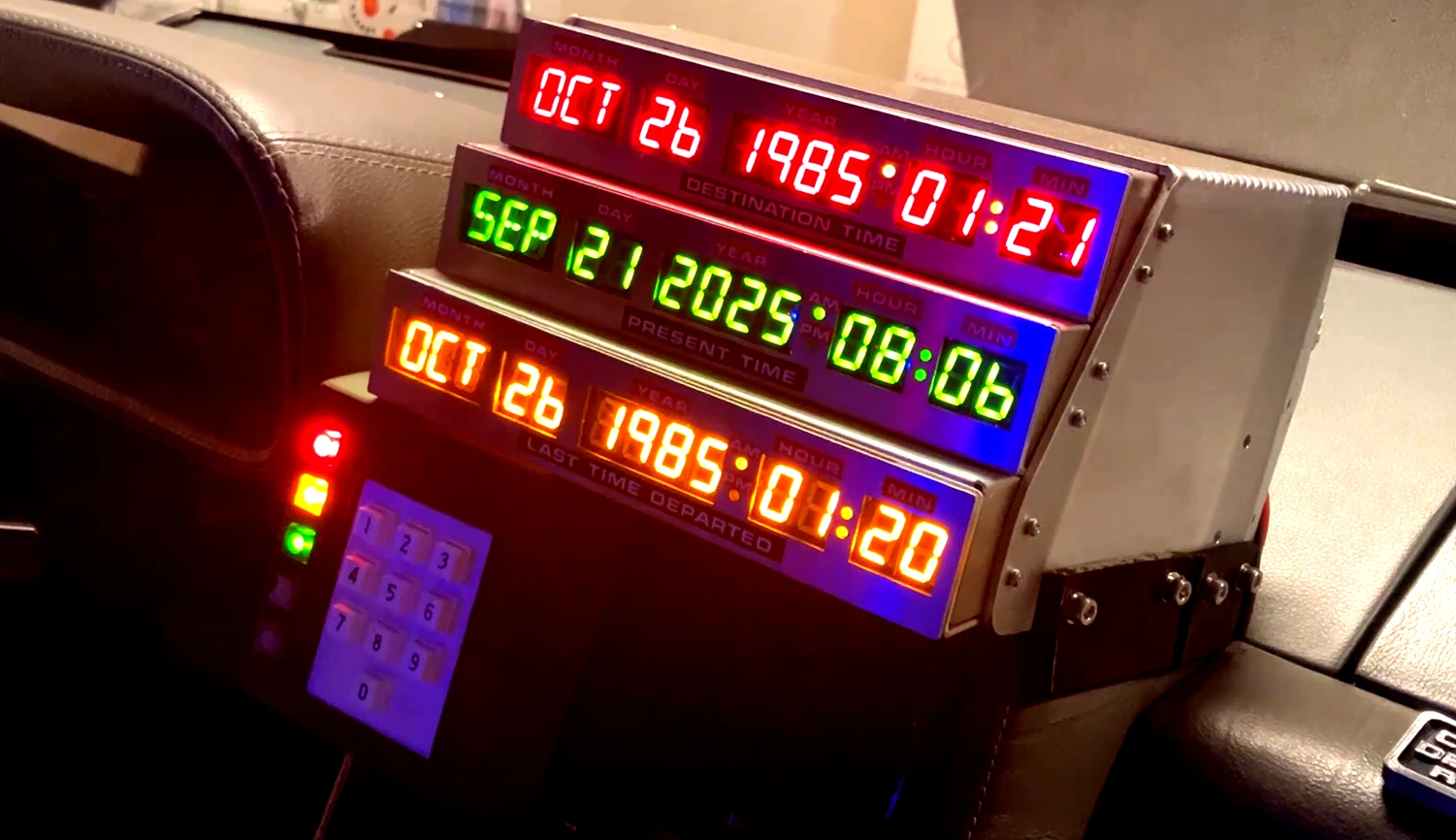
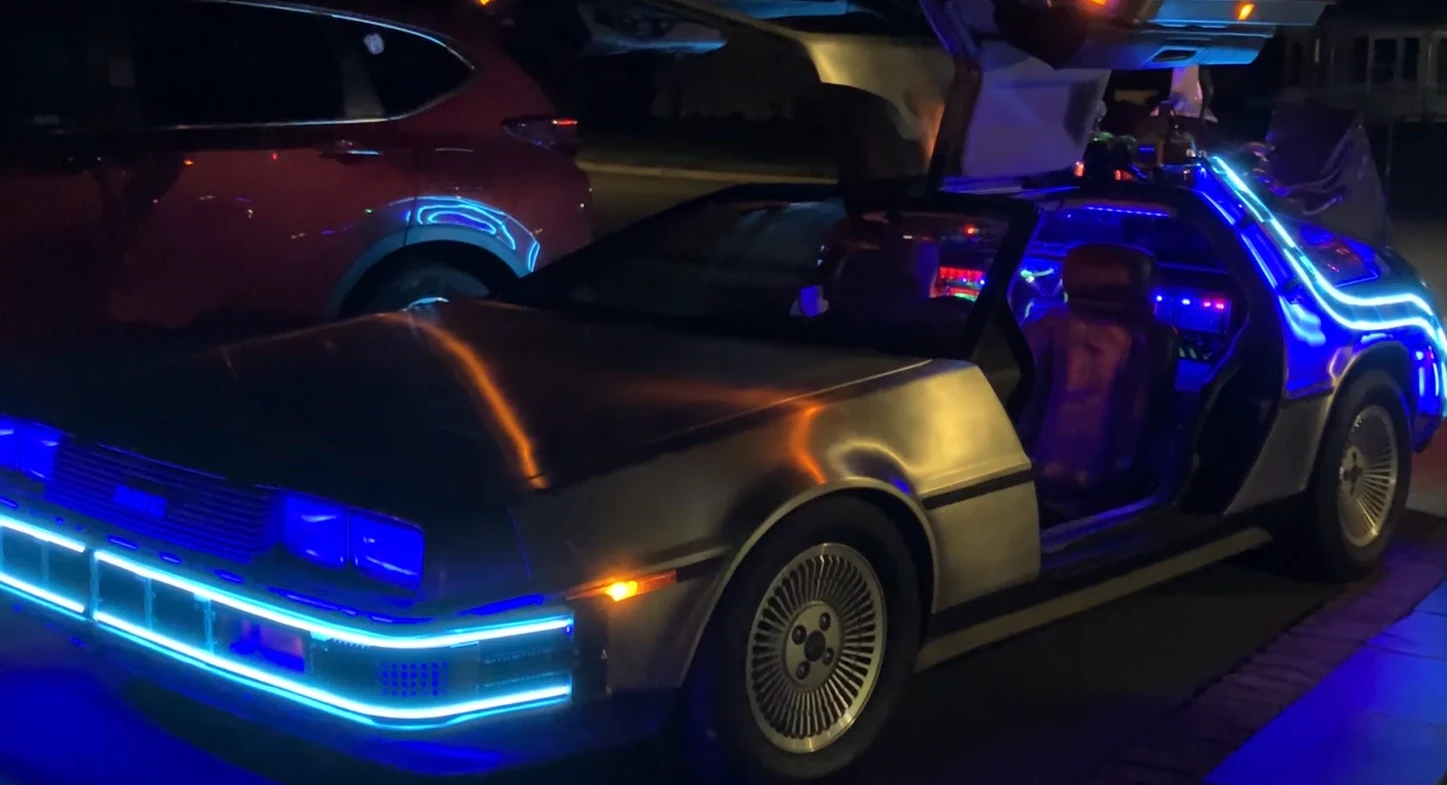
In 2026 CorKron DeLorean Time Machine brought an authentic 1982 DeLorean Time Machine experience to the Washington, DC Auto Show, in partnership with the Theresa Sondra Jacobs Foundation.
STEAM is Science, Technology, Engineering, Art, and Math working together. This exhibit shows all five in one experience.
Microcontrollers act like the system brain, coordinating lighting, sound, and timing cues. This is the same idea used in robotics, automation, and embedded devices we use every day.
Circuits amplify safe control signals into real effects. Relays, MOSFETs, resistors, and fused power paths make the show reliable and repeatable, with safety designed in from the start.
Light, motion, and sound design shape the experience. Timing and patterns create the illusion of energy and time travel, turning technical systems into something you can feel, not just measure.
Control logic, power distribution, and presentation effects are designed together to create a reliable, repeatable, and safe exhibit experience. Lighting effects can run for approximately three hours on battery power or from 120VAC through a built-in power supply for longer exhibits.
For indoor exhibits, a master cutoff switch on the main vehicle battery disables the starter motor and ignition circuits. This feature supports coordination with the local fire marshal on fire-code requirements; approval is subject to the local fire marshal and any additional venue requirements.
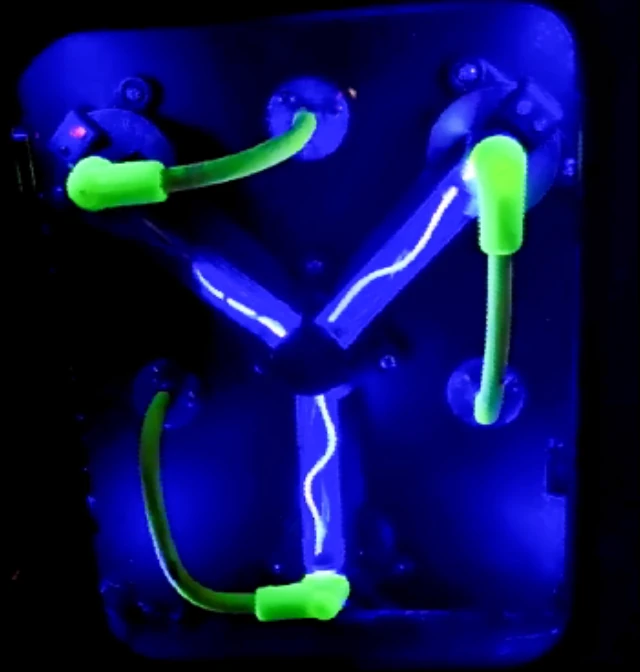
The Flux Capacitor demonstrates how code, electronics, and design combine to turn abstract signals into a physical, visible effect. What looks like cinematic energy is actually a coordinated system of control logic, power electronics, and human interaction working together in real time.
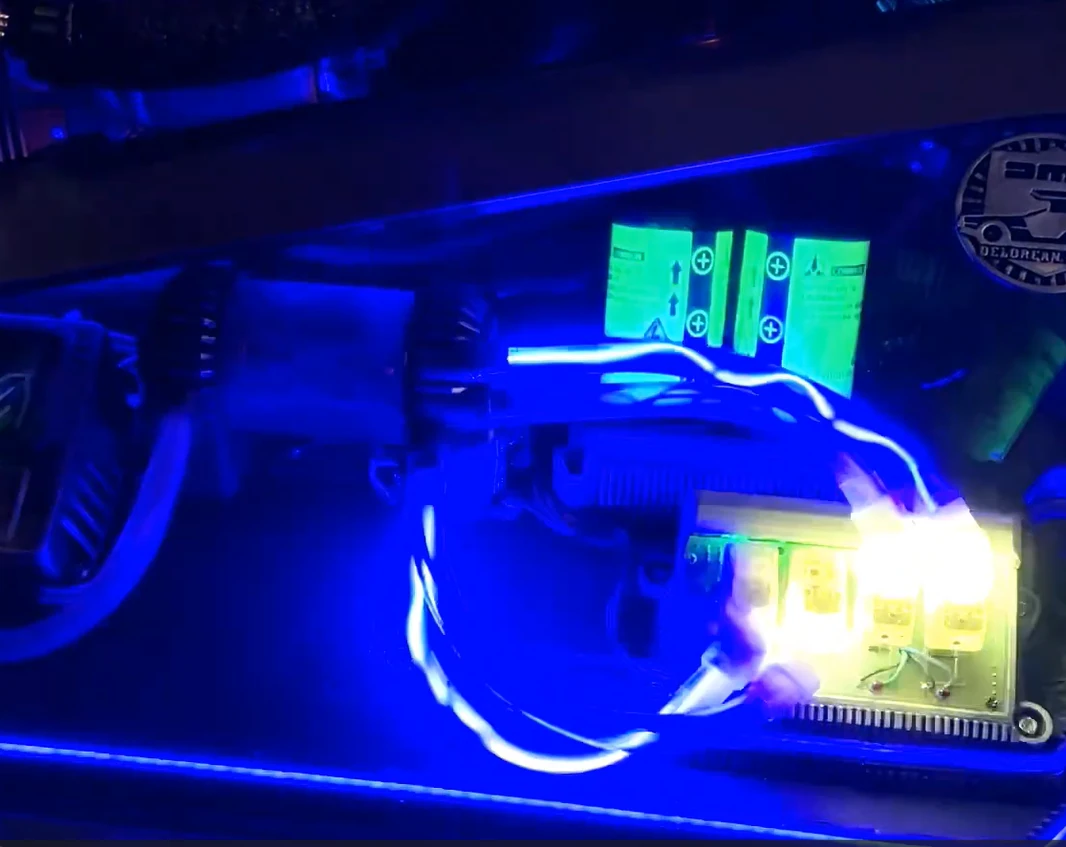
The rear window displays showcase how digital fabrication, electronics, and software come together to create a cohesive visual system. What appears to be flowing electrical energy is the result of coordinated control logic, custom-built structures, and layered lighting effects.
The interior cockpit demonstrates how humans interact with complex electronic systems. Every switch, indicator, and display is live and functional, forming a centralized control environment where user input directly drives software, power distribution, and visual output throughout the vehicle.
The exterior systems demonstrate how distributed lighting, embedded control, and visual perception work together to create a large-scale, high-impact experience. What appears to be raw energy and motion is actually a coordinated network of microcontrollers, lighting drivers, and custom hardware designed for visibility, safety, and dramatic effect in real-world environments.