Blueprint-style background of the DeLorean time machine systems layout

Sci-Fi Systems Overview

Temporal Displacement Platform

A high-level fictional explanation of how the vehicle functions as a coherent, mobile platform for controlled displacement through time.

System Narrative

Core Operational Theory

The vehicle operates as a mobile temporal displacement system built around a controlled quantum coherence field. The flux capacitor functions as the central phase-control core, initiating and regulating a synchronized state across the vehicle's atomic structure. Exterior flux bands distribute and stabilize this field, forming a containment envelope that minimizes environmental interference and preserves coherence long enough for transition.
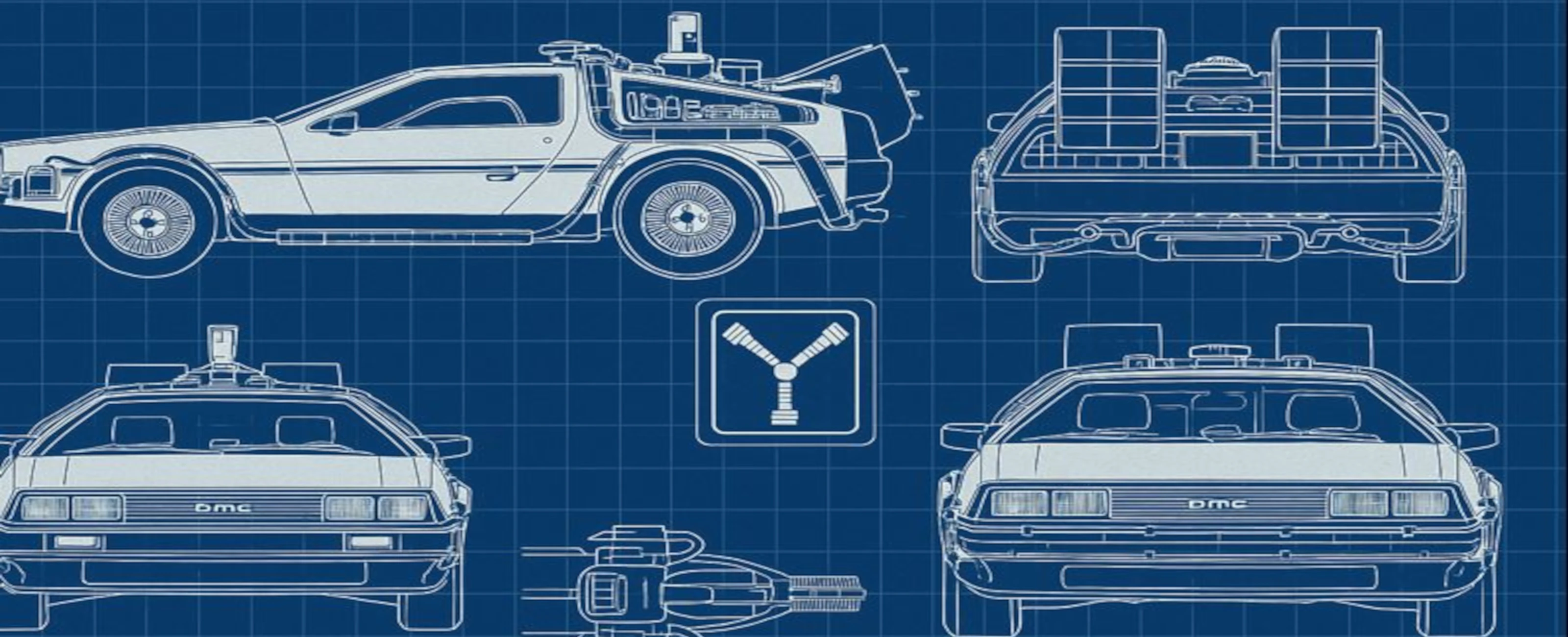
At lower speeds, the system remains in a standby state, maintaining partial synchronization without full activation. As the vehicle accelerates, energy density and system harmonics increase in parallel. At precisely 88 miles per hour, the platform reaches a resonance threshold where phase alignment locks across the entire structure. In this state, the vehicle's relationship to local spacetime becomes temporarily decoupled from its surroundings.

Once decoupled, the system enables controlled trajectory reassignment along the temporal axis. Rather than progressing linearly, the vehicle transitions between valid spacetime coordinates, effectively repositioning itself to a different point in time. This process occurs within a narrow operational window, as coherence must be maintained throughout the transition. If the field destabilizes, the system defaults to its original spacetime trajectory.

Supporting subsystems regulate power delivery, timing precision, synchronization feedback, and environmental isolation. These systems ensure that phase alignment, field stability, and transition timing remain within operational tolerances during activation.

The result is a fully integrated temporal platform in which each illuminated component and animated subsystem contributes to a unified function: achieving and sustaining the conditions required for controlled displacement through time.

Architecture Map

Primary Fictional Subsystems

This framework sets up the higher-level story now, with room to expand later into dedicated pages for each subsystem with photos, diagrams, and video.

Phase-Control Core

Flux Capacitor

Initializes atomic synchronization, governs coherence timing, and acts as the platform's central phase reference during activation and transition.

Containment Envelope

Exterior Flux Bands

Distribute the coherence field across the chassis and shape a stabilized envelope that reduces interference from the surrounding environment.

Resonance Trigger

88 MPH Threshold

Marks the moment when energy density and harmonic alignment converge, locking the vehicle into a fully coherent state for temporal decoupling.

Operational Safeguards

Support and Feedback Systems

Manage power delivery, synchronization feedback, environmental isolation, and transition timing to hold the field inside safe fictional tolerances.

System Progression

From Activation to Expansion

Transition Sequence

Standby to Displacement

  1. 1. Standby synchronization: The platform maintains partial coherence while awaiting full activation.
  2. 2. Harmonic rise: Velocity, system energy density, and field harmonics climb together as the platform approaches resonance.
  3. 3. Resonance lock: At 88 mph, full phase alignment engages across the structure and local spacetime coupling is released.
  4. 4. Temporal reassignment: The vehicle shifts to a new valid spacetime coordinate while coherence remains contained.
  5. 5. Recovery or fallback: Stable completion restores normal local coupling; destabilization returns the platform to its original trajectory.